Kindergarten Curriculum in Singapore: What Kids Really Learn
- Amazing Star
- May 16
- 5 min read

The first step into kindergarten is a big moment for both children and parents. It is the time when children start learning outside the home, meet new friends, and explore a structured learning environment for the first time. In kindergarten in Singapore, learning is not only about books. It is about building confidence, curiosity, and important life skills.
Many parents think kindergarten is only about reading and counting. In reality, the experience is much broader. Children learn how to communicate, share, solve problems, and express themselves. They also develop emotional strength and independence through daily routines and guided activities. This early stage lays the foundation for future learning, making it one of the most important parts of a child’s education journey.
Early Academic Learning in Kindergarten

The kindergarten curriculum is designed to introduce children to basic academic skills simply and enjoyable way. Learning happens through play, stories, songs, and hands-on activities instead of formal classroom pressure. Every experience, from building with blocks to singing songs, becomes part of their learning journey, strengthening cognitive skills along the way.
Literacy and Language Development
Early language learning focuses on helping children understand sounds, letters, and simple words. Children begin to recognise the alphabet, build vocabulary, and form basic sentences.
Storytelling, picture books, rhymes, and group conversations play a big role in this stage. These activities help children express ideas clearly and build confidence in communication. Writing activities often include tracing letters, drawing shapes, and forming short words. This builds early writing skills in a fun and stress-free way.
Mathematics Basics
Math learning in kindergarten in Singapore is practical and interactive. Children learn numbers through objects, games, and everyday examples. They practice counting, number recognition, and matching quantities. Simple activities like sorting toys or counting blocks help develop understanding. Children are also introduced to shapes, patterns, and comparisons such as big and small or more and less. These early concepts support logical thinking and problem-solving skills.
Science and Exploration
Science learning at this stage focuses on curiosity. Children explore the world around them and learn through observation. They study simple topics like plants, animals, weather, water, and everyday materials. Activities such as mixing colours, observing nature, or testing objects help them understand how things work. This hands-on learning builds curiosity and encourages children to ask questions and explore new ideas naturally.
Social Studies and Awareness
Social studies introduce children to their community and environment. They learn about family roles, helpers in society, and simple cultural values.
Children begin to understand respect, kindness, and responsibility. Learning about different traditions also helps them appreciate diversity. These lessons build awareness of the world and help children understand how they fit into their surroundings.
Social and Emotional Development
Kindergarten is not only about academics. It is also about learning how to interact with others and understand emotions. Children learn how to share, take turns, and cooperate with classmates. Group activities help them develop teamwork and communication skills.
They also learn how to manage feelings like happiness, frustration, or excitement in healthy ways. Teachers guide them gently to solve small conflicts and express emotions calmly. This stage builds emotional intelligence, which is important for lifelong growth and relationships.
Physical Development and Motor Skills

Physical activities are an important part of the kindergarten experience. Movement helps children stay active while improving coordination and strength.
Gross Motor Skills
Running, jumping, climbing, and balancing activities help develop large muscle strength. These activities improve body control and physical confidence. Outdoor play is often used to support this type of development in a fun and engaging way.
Fine Motor Skills
Fine motor activities focus on small movements. Children practice holding pencils, cutting paper, drawing shapes, and building with blocks. These skills prepare them for writing and other classroom tasks. They also improve focus and hand-eye coordination.
Life Skills and Independence
One important part of kindergarten learning is developing independence. Children are encouraged to do simple tasks on their own.
They learn how to:
Dress themselves
Wash your hands properly
Pack and unpack bags
Keep toys and materials tidy
These daily routines build responsibility and confidence. Children feel proud when they complete tasks without help, which supports self-esteem and independence.
Creative Learning and Expression
Creativity plays a big role in early childhood education. Children are encouraged to express ideas through art, music, and imaginative play. Painting, drawing, singing, dancing, and storytelling help children explore emotions and ideas freely.
Pretend play activities allow them to use imagination, solve problems, and understand different situations. This type of learning also supports flexible thinking and creativity.
Communication and Language Skills
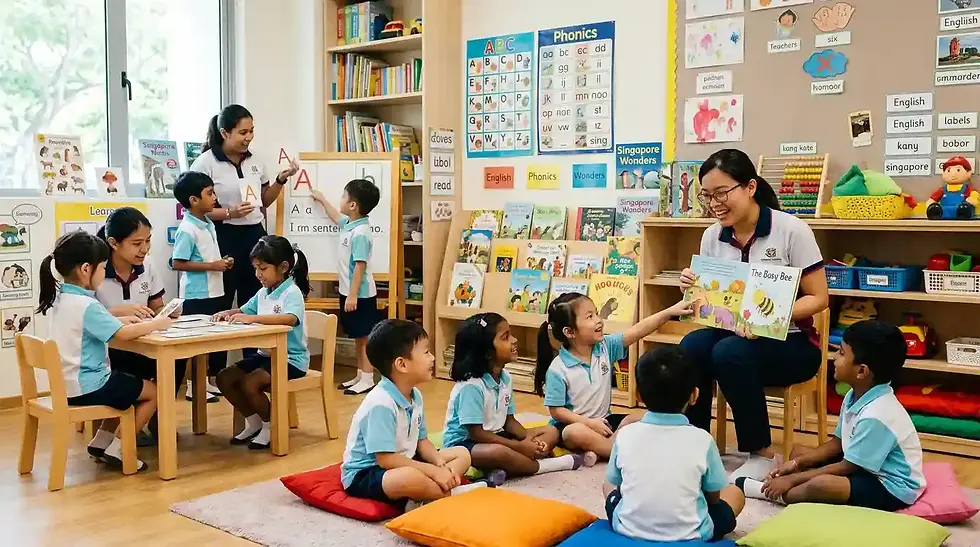
Language development is a key part of early education. Children learn how to listen, speak, and express thoughts clearly. The kindergarten English curriculum focuses on building reading habits through stories, rhymes, and group discussions. Children also practice speaking in simple sentences during daily activities.
These experiences help children become confident communicators and prepare them for future academic learning.
Understanding the Singapore Kindergarten Curriculum
The kindergarten curriculum in Singapore follows a balanced approach. It combines academic learning with social, emotional, physical, and creative development. Children learn through play-based and experience-based methods. Instead of memorising information, they explore and understand concepts through real-life examples.
This approach helps children stay curious and engaged while building strong foundational skills. Many early education systems, including preschool in Singapore, follow similar learning methods to ensure smooth development before primary school.
Why Early Learning Matters
Kindergarten is an important stage because it shapes a child’s attitude toward learning. Positive early experiences build confidence and motivation. Children who enjoy learning at this stage often perform better in later school years. They also develop better social skills and emotional balance.
Families exploring options like preschool in Bukit Panjang often look for programs that support both academic growth and personal development, similar to kindergarten learning goals.
Conclusion
The kindergarten curriculum in Singapore is much more than reading and numbers. It is a complete learning journey that supports academic growth, emotional development, creativity, and independence.
Children learn how to communicate, think, and interact with others in a safe and supportive environment. Through play-based learning and hands-on activities, they build skills that last a lifetime. This early stage of education lays a strong foundation for future success in school and life. It helps children grow into confident, curious, and responsible learners.
FAQs
1. What do children really learn in kindergarten?
Children learn basic reading, writing, and math skills along with social, emotional, and life skills like sharing, communication, and independence.
2. Is kindergarten only about academics?
No, kindergarten also focuses on emotional development, creativity, physical skills, and social interaction.
3. How is learning done in kindergarten in Singapore?
Learning is mostly play-based and hands-on, using stories, games, and real-life activities.
4. Are children expected to read before finishing kindergarten?
Some children may read simple words, but the focus is on building interest and confidence in reading, not pressure.
5. Why is kindergarten important for early education?
It builds the foundation for future learning by developing confidence, curiosity, and essential life skills.


Comments